
Compressed Air
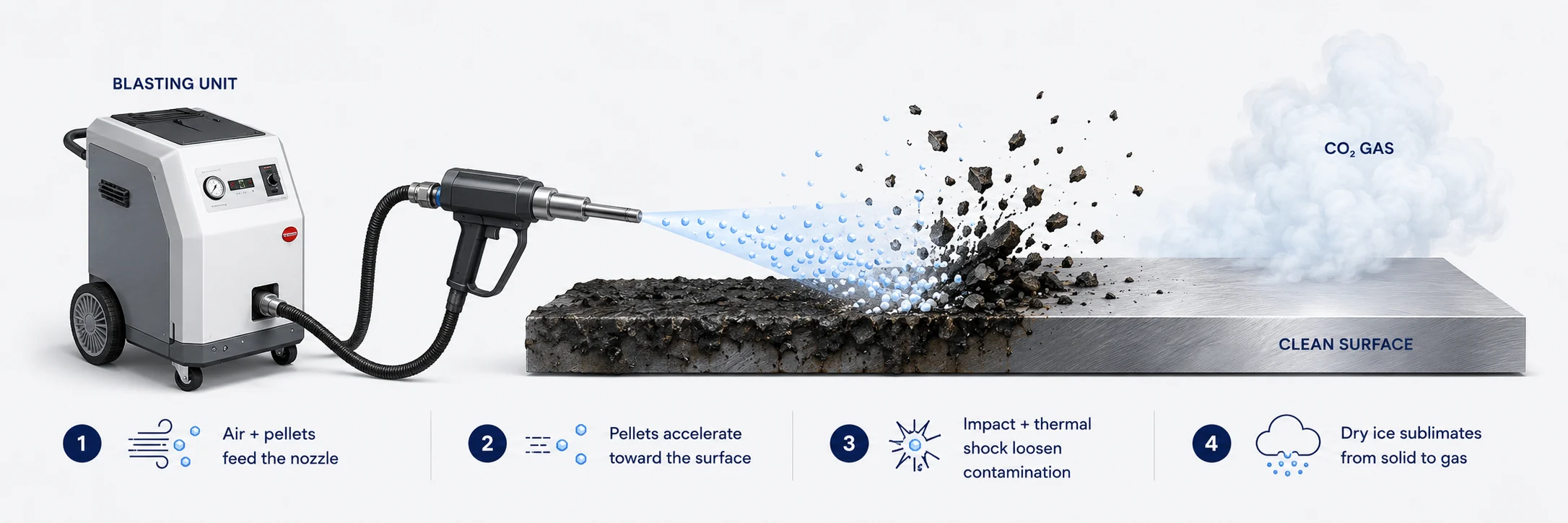
Controlled airflow drives the cleaning media toward the surface.
A moisture-free, non-abrasive cleaning process that uses compressed air and solid CO₂ pellets to remove contamination from suitable industrial equipment and surfaces.
Compressed air propels dry ice pellets onto the contaminated surface. The pellets help release contamination through impact and thermal shock, then the CO₂ sublimates from solid to gas without leaving separate blast media behind.
Controlled airflow drives the cleaning media toward the surface.
Solid CO₂ pellets are accelerated through the blasting system.
Impact and thermal effects help break the bond between contamination and the surface.
The dry ice turns to gas, so there is less secondary media to clean up.
The value is not that it is “magic cleaning”. The value is that the process can solve specific maintenance and contamination problems where other methods create additional limitations.
No water is introduced by the dry ice media.
Useful for selected surfaces where aggressive abrasion is undesirable.
Relevant to selected electrical applications, subject to the equipment and required safety controls.
The dry ice sublimates instead of remaining behind as abrasive blast material.
The blasting stream can reach selected complex geometry and hard-to-clean areas.
Not every contaminant or surface is a good fit. Suitability is checked before work is recommended.
Dry ice blasting is used across a broad range of maintenance and contamination-removal environments. Integra assesses the actual equipment, surface and operating conditions before recommending the process.
Heavy equipment, crushers, conveyors, mills, motors, hydraulic systems and processing equipment.
Engine rooms, generators, electrical systems, machinery, decks, maintenance equipment and vessel components.
Production lines, conveyors, ovens, mixers, fillers, packaging machinery, refrigeration equipment and processing surfaces.
Switchgear, transformers, motors, generators, control panels and electrical infrastructure.
Moulds, presses, production machinery, robotics, adhesives, coatings and process contamination.
Engines, underbodies, components, restoration, workshops and fleet maintenance.
Dedicated pages are currently available for mining, electrical substations and plastic-packaging production.
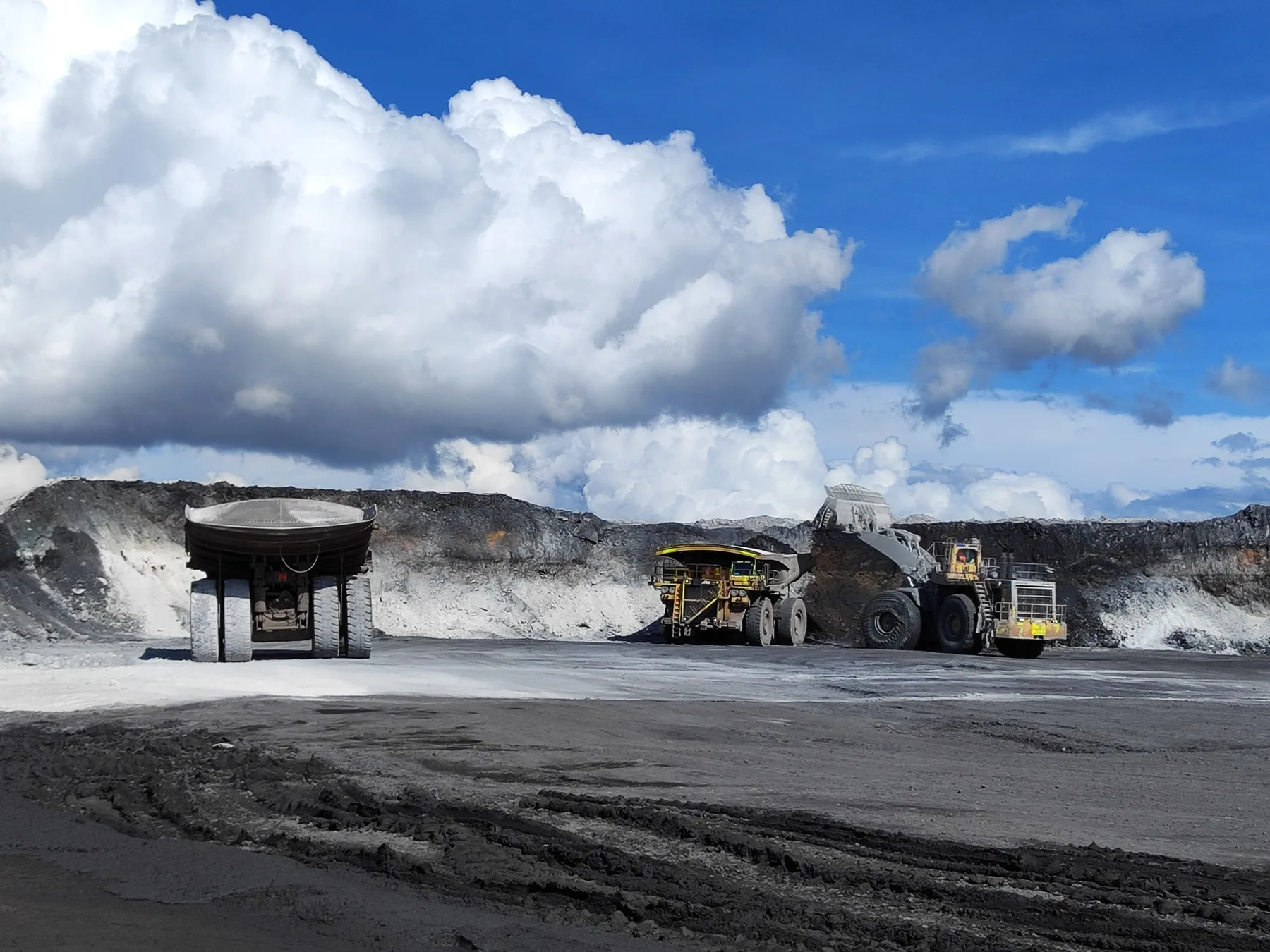 Mining
Cleaning solutions for mining and processing equipment affected by grease, oil, dust, carbon and stubborn industrial contamination.
Explore Mining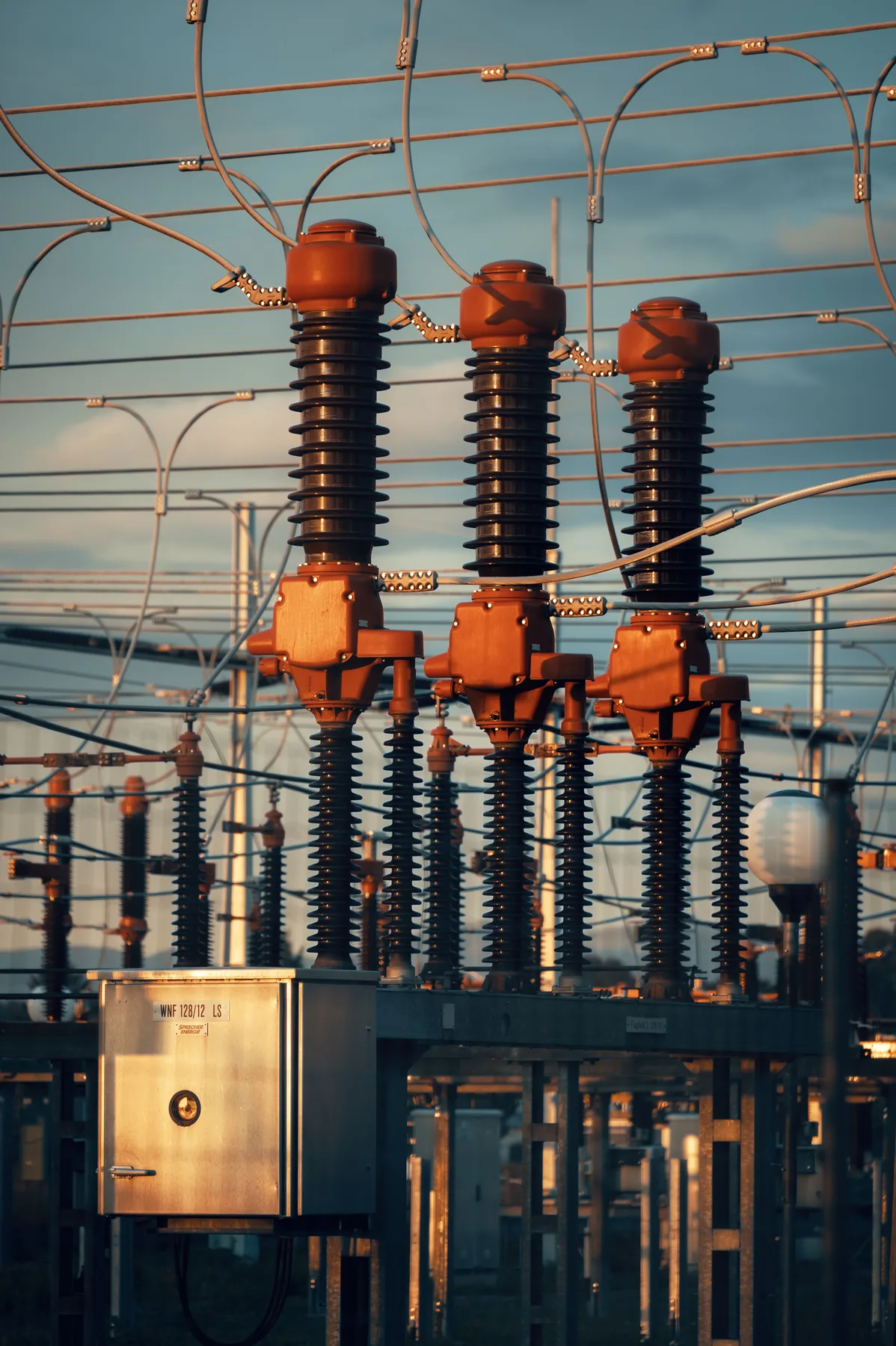 Power
Moisture-free cleaning for selected transformers, switchgear, insulators and electrical assets, subject to equipment and site safety requirements.
Explore Electrical Substations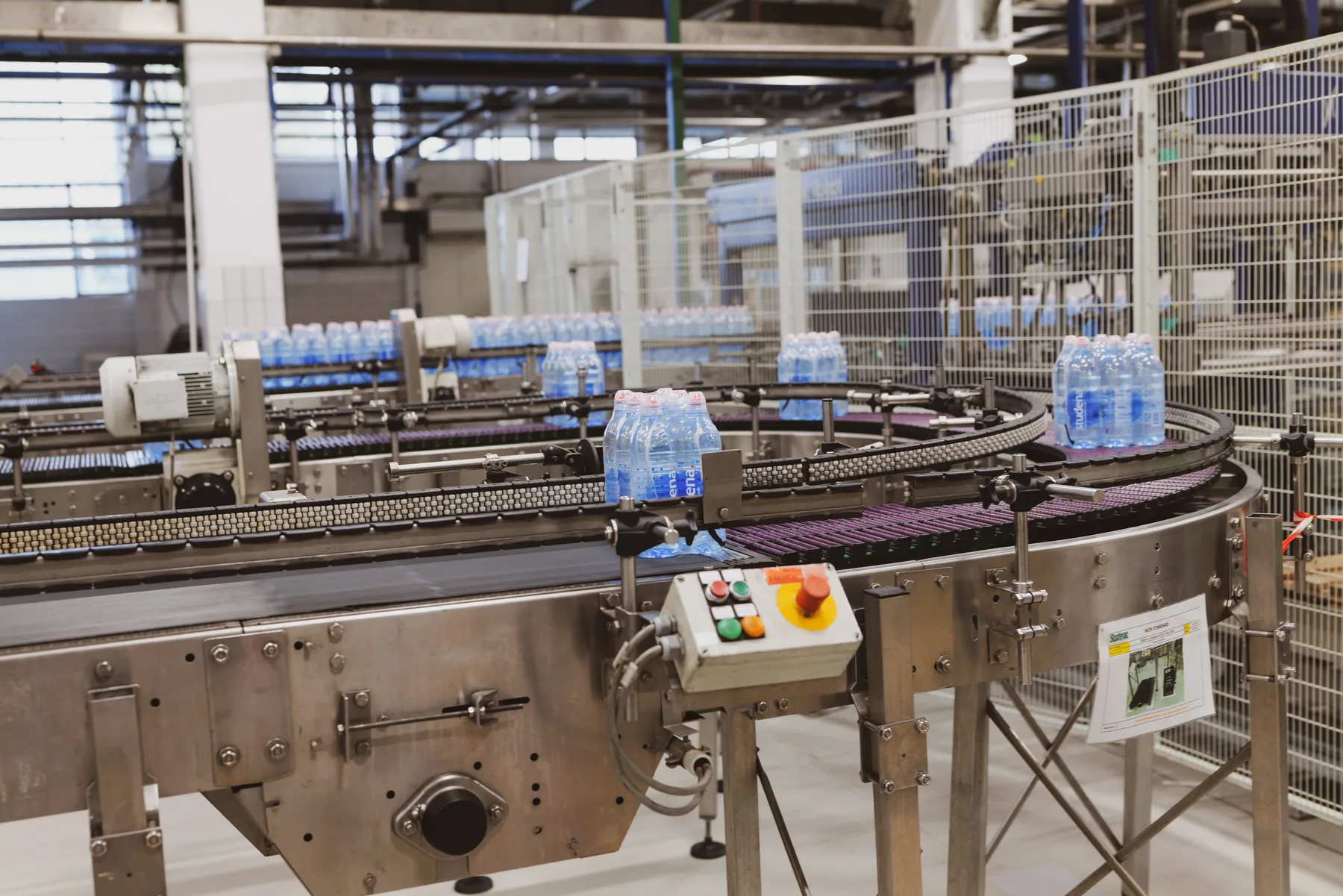 Manufacturing
Cleaning for moulds, conveyors and production equipment affected by resin, adhesive, ink and process contamination.
Explore Plastic PackagingDry ice blasting may not be appropriate for every coating, contamination type, fragile surface or operating condition. Electrical applications require additional safety assessment. Some equipment may still need isolation, disassembly or another cleaning method.
That is why Integra leads with an application assessment rather than promising the method before understanding the asset.
Check coatings, substrate condition and sensitivity.
Identify what is being removed and how strongly it is bonded.
Confirm access, controls, isolation and site procedures where required.
Plan around maintenance, shutdown or production constraints.
No water is introduced by the dry ice blasting media. The process uses solid CO₂ pellets accelerated with compressed air.
Dry ice media is generally described as non-abrasive, but the surface, pressure, nozzle, contamination and equipment condition still need to be considered.
The dry ice sublimates from solid to gas, so it does not leave a separate abrasive blasting medium behind. The removed contamination itself still has to be managed.
No blanket claim should be made. The media is non-conductive and moisture-free, but equipment condition, voltage, site procedures and operating status must be assessed.
It can reduce manual cleaning, disassembly and secondary clean-up in suitable applications, but the actual time saving depends on the equipment and cleaning scope.
Send the equipment, contamination and site details and Integra can assess whether the process is appropriate.