
Mining and Minerals
Heavy equipment, crushers, conveyors, mills, motors, hydraulic systems and processing equipment.
Specialised dry ice cleaning for mining, marine, food and beverage, electrical, manufacturing and heavy industrial environments. Remove grease, carbon, production residue and difficult contamination without introducing water or abrasive blasting media.
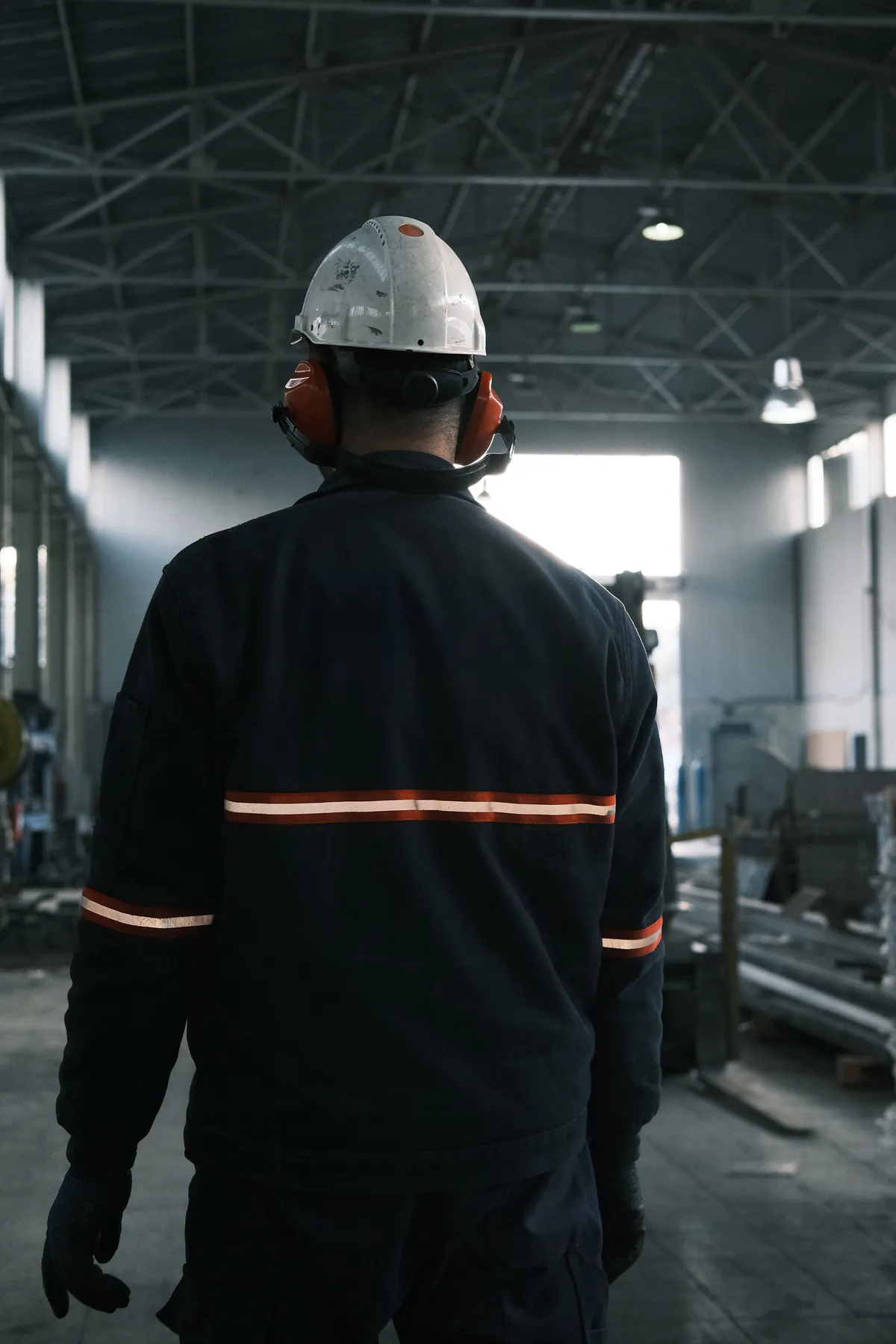
Dry ice blasting offers specialised cleaning applications across more than 52 industries, from mines, shipyards and food production facilities to electrical infrastructure, manufacturing plants and automotive workshops.
Heavy equipment, crushers, conveyors, mills, motors, hydraulic systems and processing equipment.
Engine rooms, generators, electrical systems, machinery, decks, maintenance equipment and vessel components.
Production lines, conveyors, ovens, mixers, fillers, packaging machinery, refrigeration equipment and processing surfaces.
Switchgear, transformers, motors, generators, control panels and electrical infrastructure.
Moulds, presses, production machinery, robotics, adhesives, coatings and process contamination.
Engines, underbodies, components, restoration, workshops and fleet maintenance.
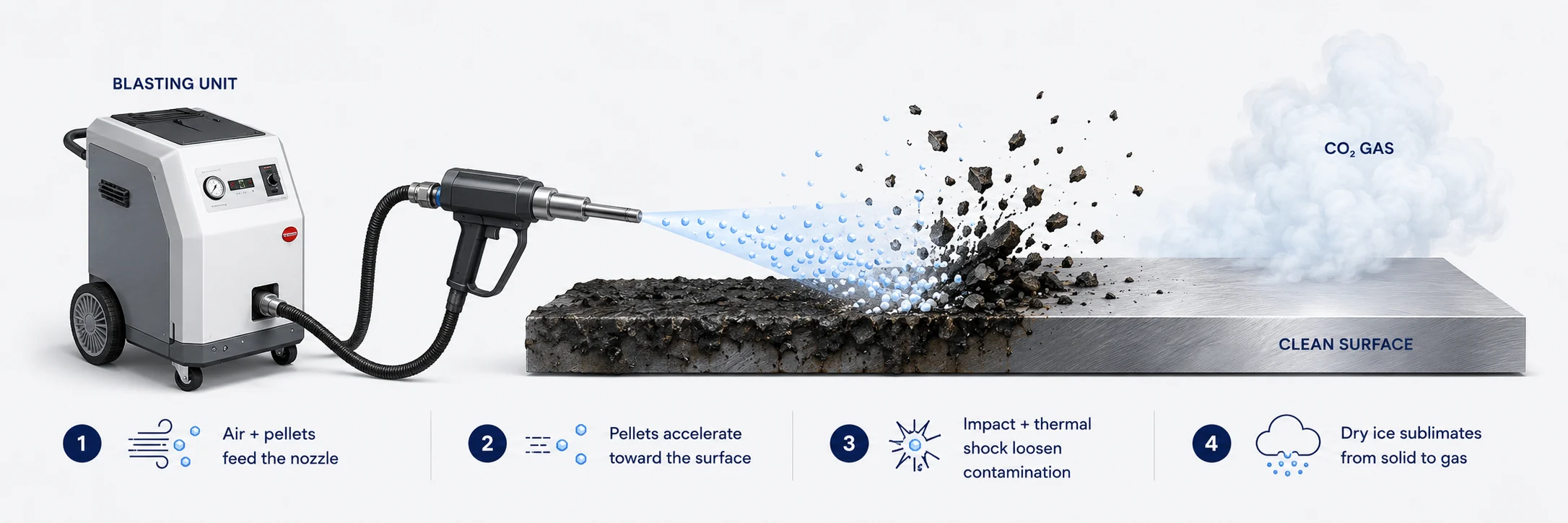
Dry ice blasting uses compressed air and solid CO₂ pellets to loosen and lift contamination from suitable surfaces. The dry ice then sublimates from solid to gas, so there is no separate abrasive blasting media left behind.
Pressurised air accelerates the pellets through the blasting system.
Solid CO₂ pellets strike the contaminated surface at high speed.
Impact and thermal shock help loosen grease, carbon and residue.
The dry ice turns to gas, leaving no separate blast media behind.
The value of the process is not simply how equipment looks afterward, it is how cleaning supports maintenance, inspection and production objectives.
Faster cleaning cycles can reduce time spent on labour-intensive manual cleaning and disassembly.
A non-abrasive process helps reduce unnecessary wear on suitable equipment surfaces.
Removing built-up contamination can improve access and visibility during maintenance inspections.
Dry ice sublimates, so the process does not leave separate abrasive blast media to collect afterward.
The blasting stream can access components and detailed areas that are difficult to clean manually.
Integra evaluates equipment, contamination and operating requirements before recommending the method.
Critical industrial assets should not be approached with a one-size-fits-all cleaning method. Integra starts by understanding the equipment, contamination, site conditions and maintenance objective.
Request an AssessmentEquipment, contamination and site conditions are assessed.
Access, controls and suitability are confirmed before work begins.
The selected cleaning approach is carried out around operational requirements.
Send the equipment details and site requirements so the team can assess the application.